



Reliable Drone PCB Turnkey Service Provider
CONSONS delivers end-to-end EMS solutions for drone electronics, covering rigid PCBs, FPCs, and PCBA assembly. Through EMS one-stop service, we integrate PCB manufacturing, component procurement, SMT assembly, testing, and finished product assembly into the same supply chain, providing a reliable electronic foundation for drone flight control, power management, navigation, communication, camera, and sensor systems.
In response to the space utilization and electronic integration requirements of drones, our drone PCB Assembly supports 0.3 mm BGA pitch, minimum 01005 components, and multi-layer PCB designs to integrate more functions in limited space. We use automated SMT assembly and strict inspection steps to ensure assembly consistency, supporting IPC Class 3 assembly requirements. At the same time, our pre-production DFM/DFA analysis helps eliminate design flaws early, reducing time-to-market by up to 30%.
Contact us for customized drone PCB solutions to optimize your drone production.
Drone PCB Types
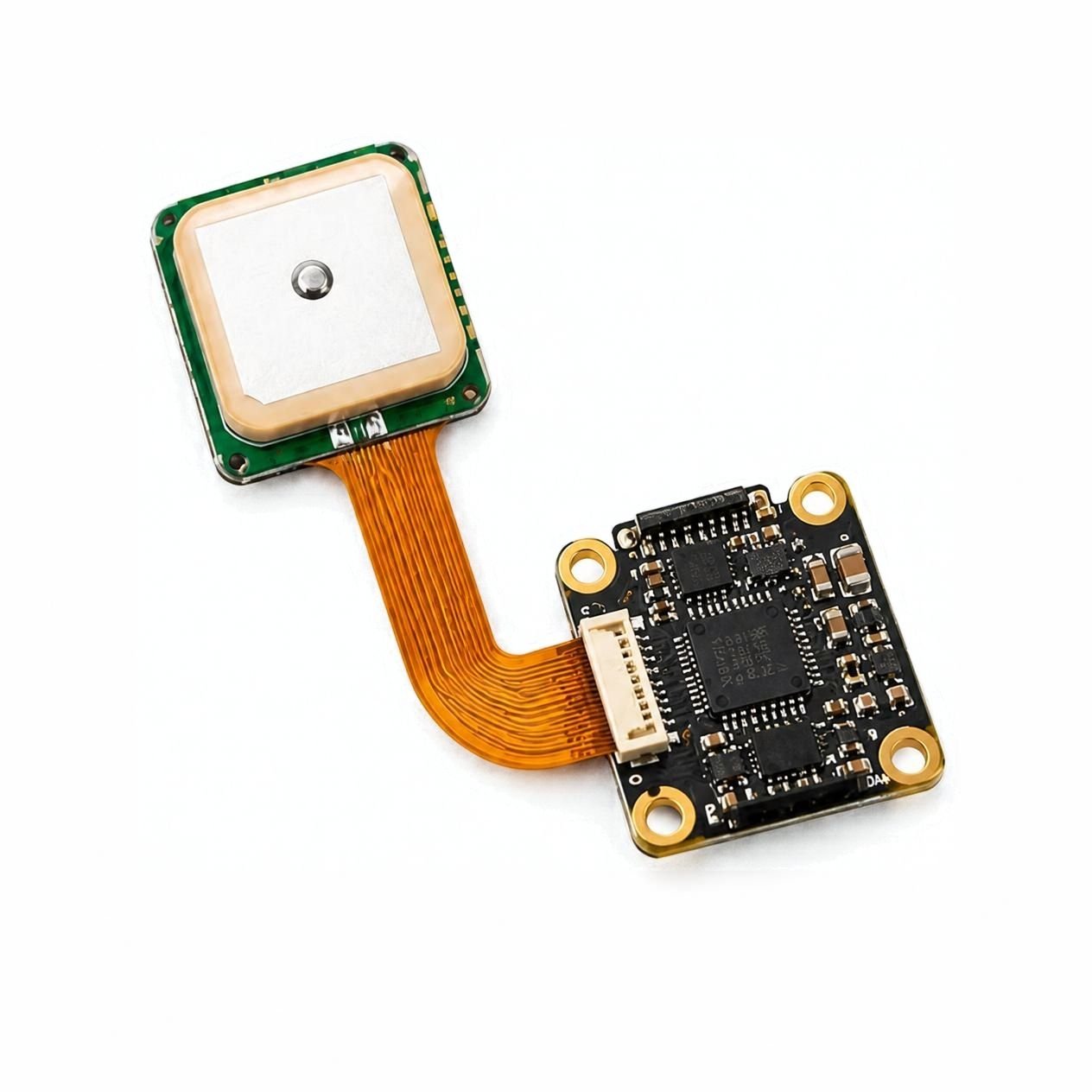
As the drone brain, it processes data from sensors such as gyroscopes and accelerometers, and executes flight algorithms. It is a high-density multilayer board with high anti-interference capabilities.
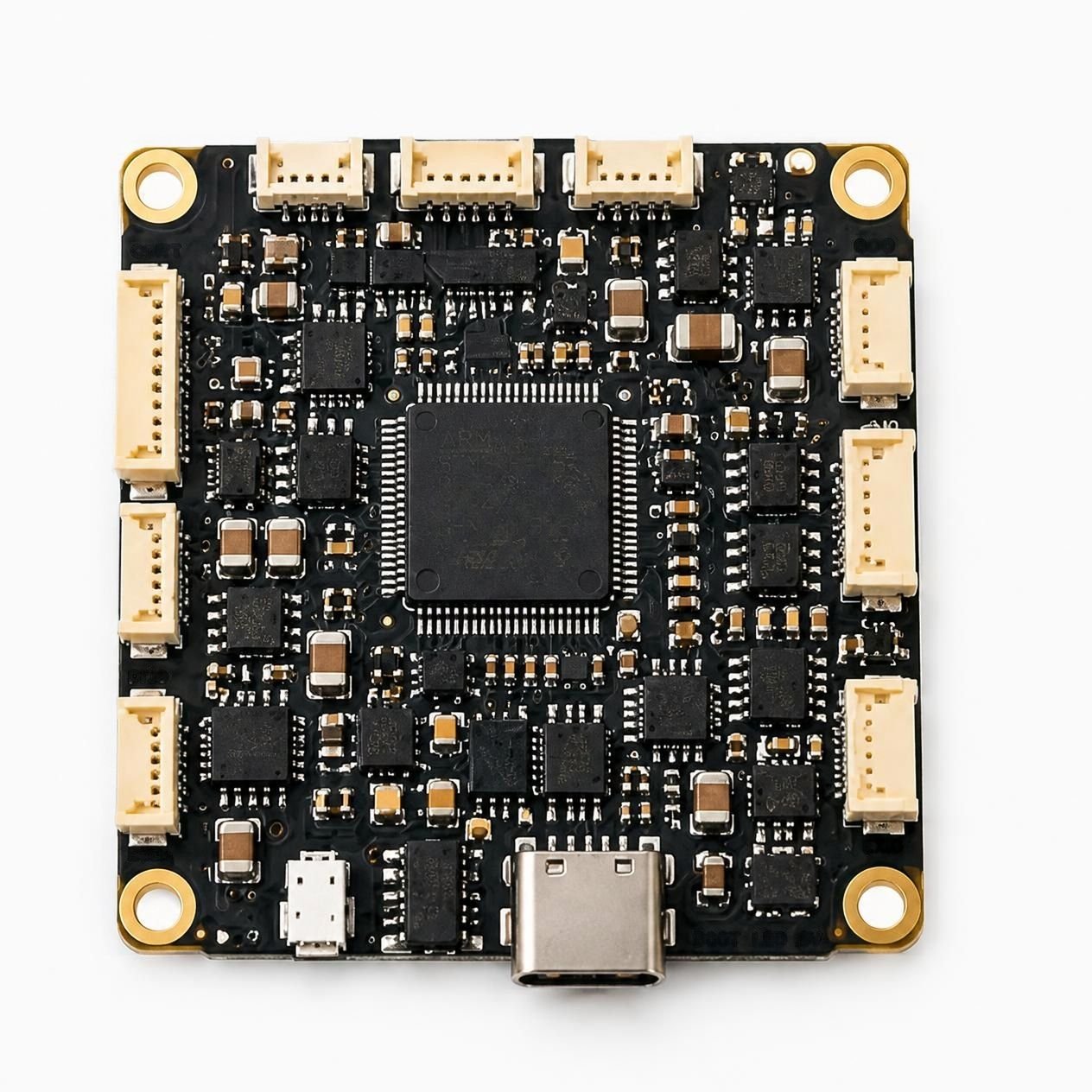
It typically uses thick copper to carry strong currents and dissipate heat, converting the flight control signal into current and controlling the motor speed and direction.
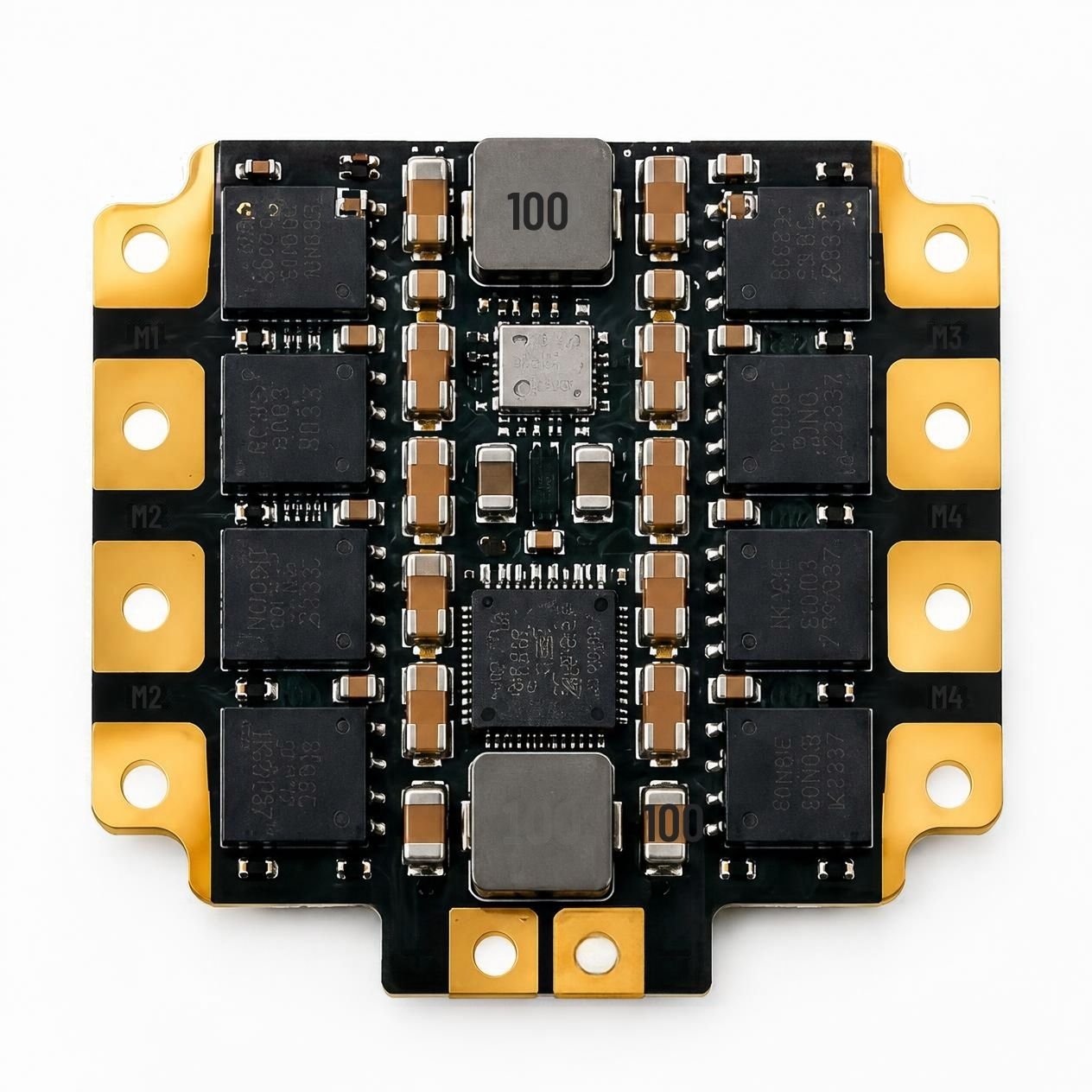
It is usually a 2-layer or 4-layer board, but has strong current-carrying capacity, short-circuit protection, and BEC, stably distributing power to various electrical equipment such as flight control.

It belongs to RF PCB and is responsible for encoding and transmitting wireless video signals. Unlike ordinary digital circuit boards, it uses low-loss high-frequency materials and has strict impedance control.
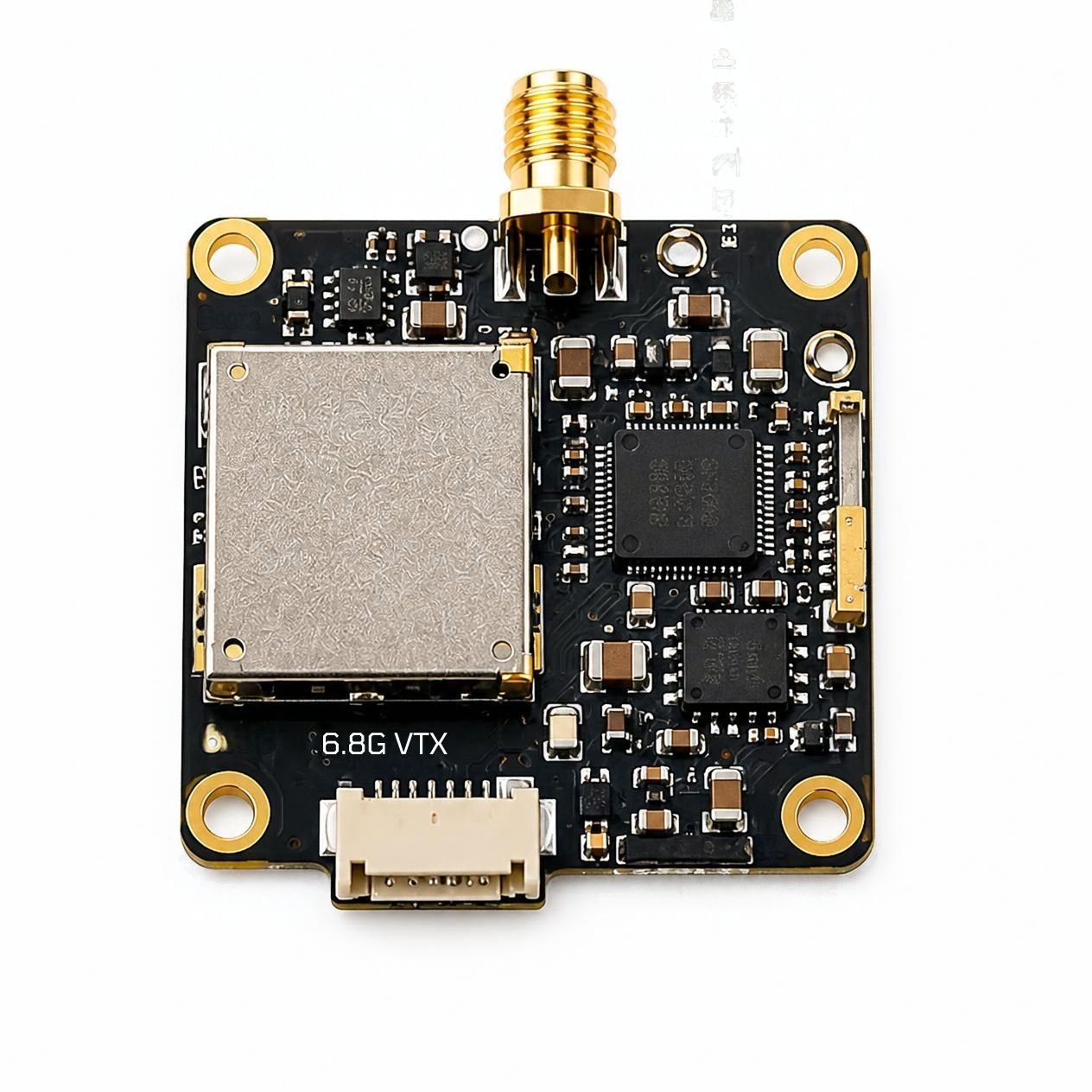
It is usually small in area and has strict physical requirements on dielectric constant and antenna gain. Sometimes it is attached to the drone body using rigid-flex plates.
Efficient Heat Dissipation
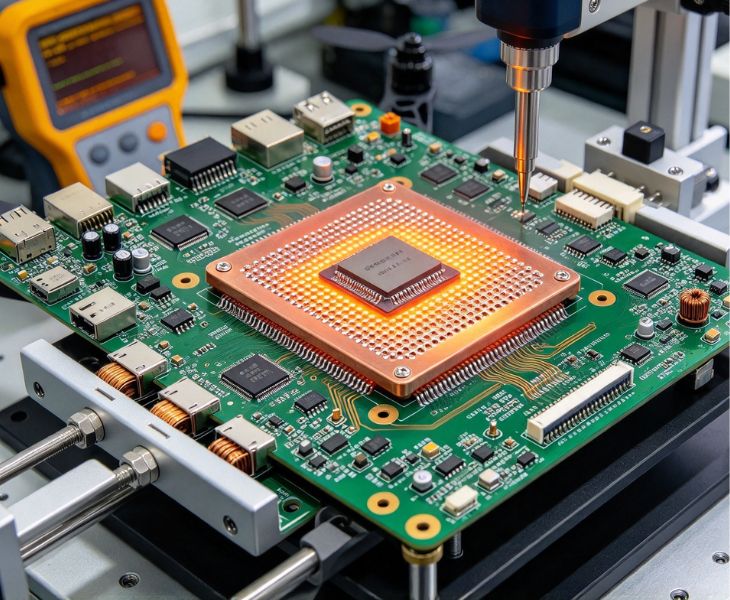
Our drone PCBs can establish an effective heat dissipation path for key components, conducting heat to the copper area, thereby reducing local heat accumulation and allowing the drone to fly stably for a long time. Thick copper reduces DCR and acts as a natural horizontal heat sink. The thermal vias conduct heat vertically from the top layer to the ground plane or inner layer. We also use a high Tg and high thermal conductivity substrate to further improve heat dissipation.

High Current Capacity
We provide copper thicknesses up to 6 oz according to requirements, easily withstand peak currents exceeding 150A in motor controllers and electric regulating boards without overheating. Proper power and ground circuit design reduces resistance and heat generation in high-current areas, making PCBs more suitable for high-load UAV power supply electronic systems and controlling power loss within a certain range. Our drone PCBs with high current capacity enable high-power UAVs to operate reliably and long-lasting under sustained high-load conditions.
Project Cases of Our Drone PCBs

CONSONS partnered with a South Korean drone camera manufacturer to deliver our high-density PCB and SMT assembly service. Combined with automatic AOI optical inspection and X-Ray inspection, we met the manufacturer’s high requirements for PCB space utilization and component integration density.
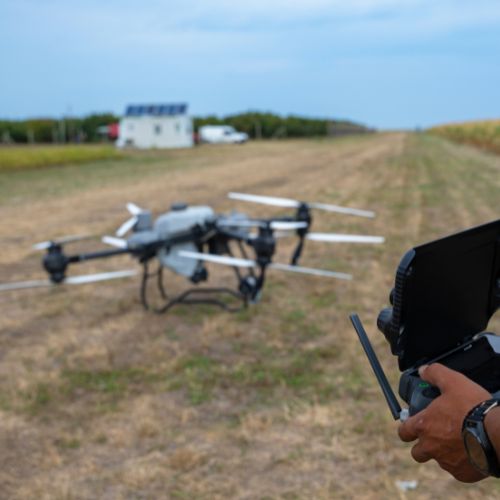
A Japanese agricultural drone manufacturer was seeking stable batch deliveries of drone PCBAs. CONSONS relies on a unified supply chain to provide services from multi-layer PCB manufacturing to functional testing, helping our customers achieve large-scale UAV production rapidly and smoothly.
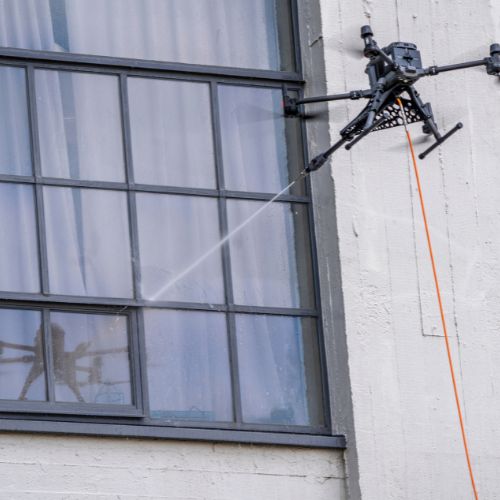
Faced with the procurement demand for drone PCBAs issued by a US commercial drone manufacturer, we provided multi-layer rigid PCBs supporting 0.10 mm line width/line spacing and 0.3 mm BGA pitch, and performed high-precision positioning, patch, and reflow soldering to help the customer reduce the final drone size.
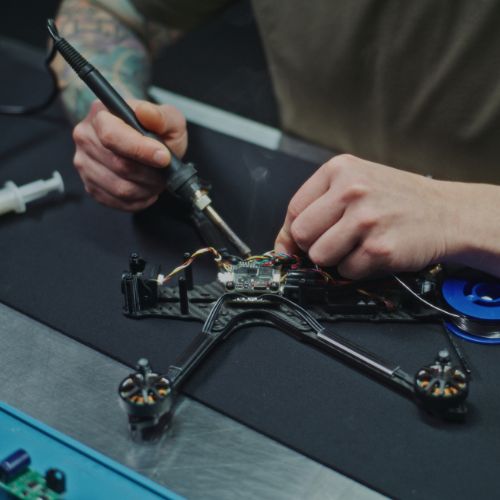
The client sourced high-density drone PCBs for commercial drones. CONSONS supplied high-precision multi-layer panels and provided BOM audit and full component procurement services. Our one-stop EMS model simplified the procurement process of the client’s supply chain.

A German industrial drone company needed to solve the problem of limited internal space for compact inspection drones. CONSONS combined the rigid-flex drone PCB with precision SMT assembly, successfully helping the customer optimize the drones’ internal three-dimensional layout and reduce cable complexity.
Rigid drone PCBs typically use hard substrates such as FR-4 to stably support components and connectors. They are suitable for electronic systems with high stability requirements such as flight control, power management, or communication modules.
Flexible Drone PCBs typically use a bendable polyimide substrate that can be bent and folded to adapt to small and irregular internal spaces while reducing cables and connectors. They are suitable for moving parts such as gimbals, motors, or folding arms.
Rigid PCBs generally offer better mechanical stability and cost advantages, while flexible PCBs offer lighter weight, greater design freedom, and greater vibration absorption.
When a drone’s compact housing limits space yet requires mechanical stability, rigid-flex PCBs are a good option to avoid premiums.
They will be used to mount rigid areas of components such as processors, sensors, and connectors, combined with flexible areas that can bend around the internal structure, replacing multiple failure-prone cables and connectors in vibration, reducing assembly complexity, connection points, and helping to reduce overall weight.
For compact UAVs with complex internal layouts, limited space, or moving parts, we offer customized rigid-flex PCB manufacturing and PCBA assembly to help customers integrate multiple electronic functions into compact drone structures.
When designing lightweight PCBs, we do not simply reduce parts, but achieve it through component selection, design optimization, and process innovation. Our engineers optimize PCB size, copper thickness, layer configuration, component layout, and wiring density based on actual electrical needs, reducing material and assembly weight while ensuring electrical, mechanical, and heat dissipation performance.
When designing compact drones, we reduce cables and connectors with flexible PCBs or Rigid-Flex PCBs. The 4–6-layer HDI design is adopted to integrate more functions in a smaller space. We also perform DFM analysis before mass production to confirm the manufacturability of the product.
We control EMI and EMC on our drone PCB products through optimized PCB stacking, grounding, power distribution, and signal routing. High-speed signals and sensitive signal lines are routed carefully, while solid ground planes with controlled return paths help reduce unwanted electromagnetic coupling.
Decoupling capacitors are positioned as close as possible to power pins to suppress high-frequency noise. Sensitive communication circuits, sensor areas are separated from noisy power or switching circuits, with protective rings and stitched vias added.
With these methods, you can get drone PCB products with stable signal integrity, controlled electromagnetic interference, reliable power distribution, and improved EMC performance.
There is no optimal surface treatment process that works for all drone PCBs. We support various Drone PCB surface treatment processes. ENIG provides a flat, antioxidant gold layer that facilitates BGA assembly and high-density SMD of fine-pitch components and is generally suitable for high-density drone PCBAs.
ENEPIG are used if you need a bonding process to achieve electrical connection. OSP offers cost-advantaged options for some applications, while lead-free HASL is also an option if you’re more concerned with cost and traditional reflow soldering performance. We will help you evaluate the most suitable surface treatment options during the engineering phase.
Yes. As a one-stop EMS supplier, we have included IC programming in our service range for drone products, including MCU firmware programming, FPGA configuration, and EEPROM programming, to help you get a programmed, tested Drone PCBA that can directly enter the next production stage.
Once the SMT or THT is assembled, we can program the MCU, processor, memory IC, and other programming-enabled devices according to the firmware and production requirements you provide. We can also combine IC programming with functional testing to verify the assembly and functional status of the PCBA before shipment.