



Why Choose Consons?
- Provide DFM / DFT recommendations and identify risks in advance
- Provide turnkey services from PCB design to complete box-build assembly
- Certified with ISO9001, ISO14001, IATF16949, ISO13485:2016, BSCI, etc.
- Full-process MES traceability allows complete data records for every PCB
- PCB production capacity of 10,000㎡ per month ensures reliable delivery

Flight Controller PCB Manufacturing & SMT Assembly Services
Consons is an EMS provider with over 20 years of experience in electronic manufacturing. We provide one-stop flight controller PCB assembly services, which cover PCB manufacturing, component sourcing, SMT assembly, and functional testing.
Our flight controller PCBs support 01005 micro-components and 0.3mm pitch BGA assembly; this enables lightweight and high-density integration. In addition, we provide EMI-resistant and low-latency signal optimization for critical sensors, including IMU, barometer, and GPS modules, ensuring fast flight controller response, stable attitude control, and improved sensor accuracy.
Consons uses advanced equipment for X-Ray inspection, AOI inspection, 100% FCT testing, and MES traceability, to reduce the risk of functional issues on every board. Our factory has passed ISO9001, IATF 16949 (Automotive-Grade Reliability), and ISO 13485 certifications. We can also support your product validation from EVT to DVT and PVT.
Types of Our Flight Controller PCB Boards

We support the assembly of 01005 components, 0.3mm pitch BGA/QFN, fine-pitch LGA sensor encapsulation, to reduce the weight of micro drones and FPV drones.
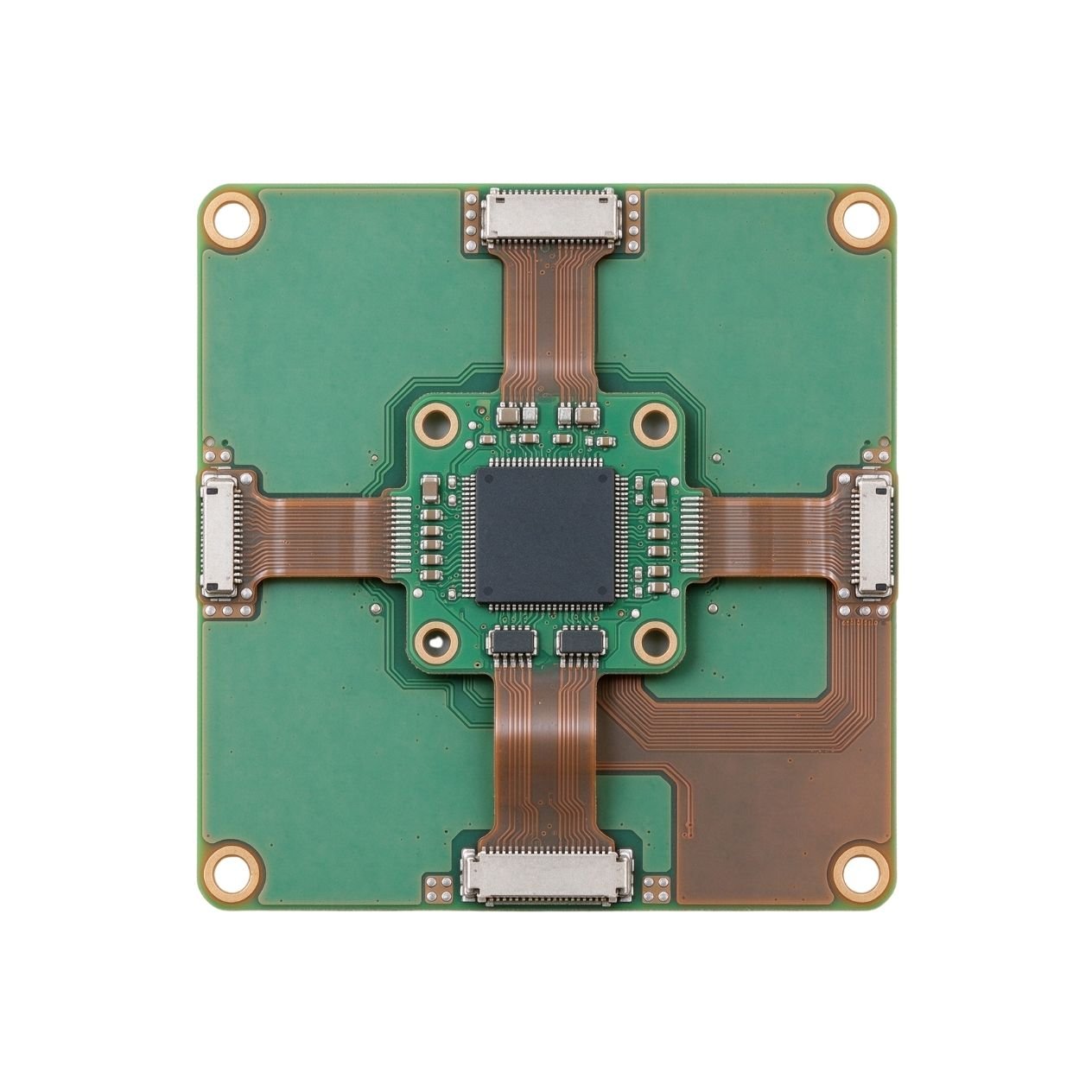
These PCBs use rigid-flex designs for folding arms and gimbal systems, to reduce wiring damage and connection issues caused by movement.
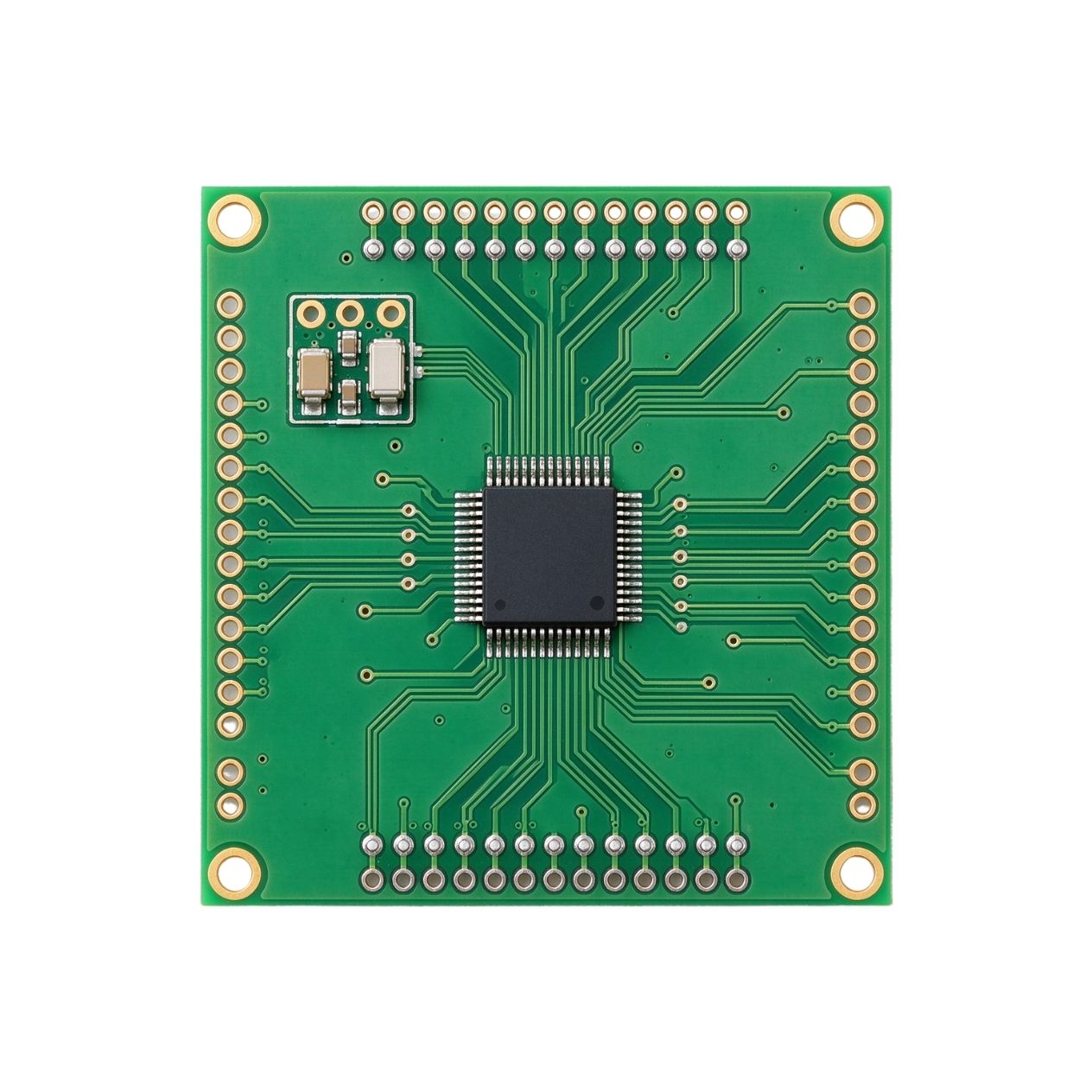
For these PCBs, we carefully control signal impedance to reduce positioning errors and signal loss, which makes inspection, mapping, and delivery drones operate more reliably.

Designed with up to 4oz heavy copper, these boards handle high-current loads while minimizing heat dissipation and are ideal for heavy-payload agricultural and eVTOL platforms.
Features of Consons’ Flight Controller PCBs

By utilizing High-Density Interconnect (HDI) design and advanced substrates, we restrict board weight to just 3–9g, greatly extending flight endurance for micro drones.

We strengthen solder joints against vibration and use automotive-grade materials, to help drones operate stably in strong vibration and high or low temperature conditions.

The PCB uses impedance matching and ground plane shielding designs, which can reduce sensor errors and positioning drift caused by electromagnetic interference.

We use low-latency signal routing designs and high-speed PCB materials; this will improve flight controller response to remote control commands and sensor data.
Adaptability To Complex Environments
Consons’ aircraft PCBs are designed for harsh operating environments. We use vibration-resistant layouts and underfill processes. Even under strong vibration and hard landing impacts, the solder joints and components remain firmly attached.
In addition, for high-humidity and corrosive environments, such as offshore inspection and agricultural spraying, we provide conformal coating processes, to protect the PCBs against moisture, salt spray, and dust. If your aircraft will be used in cold high-altitude areas or hot desert environments, we can also design PCBs to make it handle these conditions.

Specification
| Item | Options |
| Layer Count | 4–8 layers standard, HDI available |
| Base Material | High-Tg FR-4, Tg≥170°C; low-loss / halogen-free optional |
| Board Thickness | 0.8mm / 1.0mm / 1.6mm, custom available |
| Min. Trace / Space | 3mil / 3mil |
| Min. Hole Size | Mechanical 0.20mm; laser 0.10mm |
| Copper Thickness | Outer 1–2oz, inner 1oz; thick copper up to 4oz |
| Surface Finish | ENIG / OSP / immersion tin |
| Solder Mask Color | Green / Black / Blue / Red / White |
| Impedance Control | ±10%, TDR report available |
| Flammability | UL 94V-0 |
| Operating Temperature | -40°C to +125°C |
| Warpage | ≤0.75% |
Consons Strict Quality Assurance And Testing Process

Before component placement, we use SPI to check the solder paste amount and thickness to prevent insufficient solder and solder bridges. After SMT placement, we carry out 100% AOI and X-ray inspection on PCBs to check for solder joint defects such as voids, bridging, and cold solder joints.

The ICT and flying probe tests can find PCB electrical connection problems. If PCBs have issues such as open circuits, short circuits, incorrect components, or reversed polarity, these defects will be detected during this step.
During the prototype stage, we use flying probe testing and quickly verify electrical connectivity. For mass production, we use ICT fixtures, which can test every board or perform sampling tests based on your requirements.

We pay special attention to this step. The tests include power-up sequence checks, sensor function tests, PWM and communication tests, firmware verification, and button, LED, and buzzer checks. They will simulate real working conditions, and ensure that every flight controller board works properly after assembly.

After that, we simulate the actual working conditions based on the product’s application. The tests usually include:
- Vibration tests: Simulate the drone vibrations and check solder joint reliability.
- Temperature cycling tests: Verify performance in different temperature conditions.
- Aging tests: Run the product for 24–72 hours to identify the early failures.
- Conformal coating checks: Inspect coating thickness, coverage, and pinhole defects.
The main differences lie in their functions and performance. Normal drone PCBs have simpler functions; they have lower requirements for signal integrity, vibration resistance, and latency.
In contrast, flight controller PCBs need to process high-speed sensor signals and typically feature high-density routing, low latency, and strong electromagnetic interference (EMI) resistance. They can also operate reliably under high-frequency vibration and humid environments for long periods.
We will help you choose the right PCB layers and materials based on your needs. In general, consumer drones and FPV drones use 4–6 layer PCBs, while the professional drones with RTK/GPS modules usually need 6–8 layer PCBs.
For PCB materials, we recommend high-Tg FR-4 materials with Tg ≥170°C. If your application involves RF or high-speed signals such as GPS, video transmission, or remote control, we recommend using low-loss PCB materials. If your products will be exported to the EU, we also provide halogen-free materials.
During the design stage, we choose suitable PCB thickness and layout. For BGA and large components, we use underfill and solder reinforcement to improve vibration resistance and protect solder joints.
In addition, we will carry out 100% X-ray inspection on all BGA and QFN components. If needed, we can also conduct reliability tests, including vibration tests, high and low temperature cycling, and aging tests.
We offer flexible MOQ options. For prototypes, we do not have a fixed MOQ. You can place an order starting from 1–5 pcs. Consons also supports tiered pricing and mixed-model production.
We provide complete BOM cost reduction and component replacement solutions. We use our own supply chain and multiple authorized distributors to ensure a stable component supply. If the original components are out of stock, our engineers will suggest compatible parts and verify their reliability.
We take several measures to protect your intellectual property; every stage involving the related files has clear procedures in place. The measures include:
- NDA signing
- File encryption and access control
- Your ownership of fixtures, stencils, and production programs
- Workshop zoning and access control management
- Full production records with complete traceability
Get Your Tailored Flight Controller PCB Solution
Send us your requirements and get your custom flight controller board solutions!