


Trusted Polyimide PCB Manufacturer
- Layer Capability: 1–30 layers for flexible and rigid-flex PCBs, supporting complex, high-density designs.
- Copper Thickness: 1/3 oz to 2 oz options for different current and bending requirements.
- Line Width / Spacing: Minimum 2/2 mil for precise, high-density routing.
- Bending Performance: ≥1,000 static and ≥100,000 dynamic bends, depending on design and conditions.
- Impedance Control: ±6% to ±10% tolerance for reliable high-speed signals.
- Certification: IPC-6013, IPC-2223, UL, RoHS, and REACH compliance.
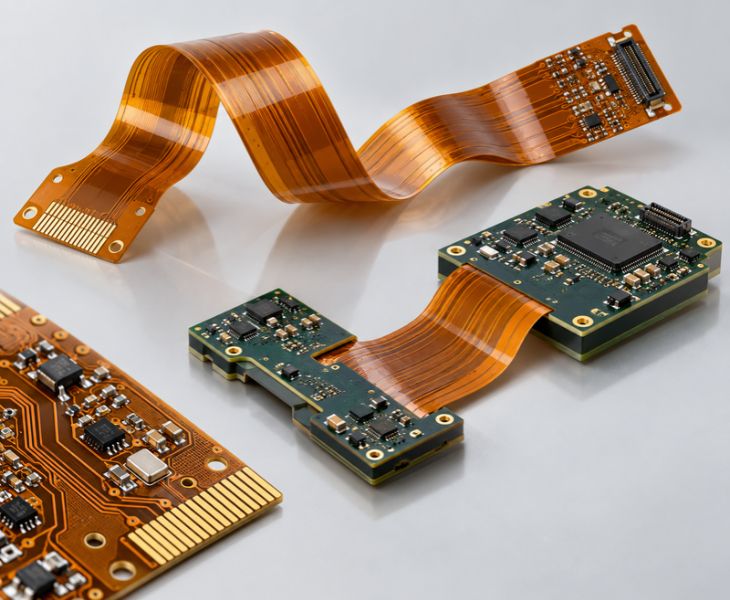
What is a Polyimide PCB?
Polyimide PCBs are high-performance circuit boards made from a polyimide substrate, featuring exceptional high-temperature resistance, extreme flexibility, and reliable mechanical properties. They enable 3D folding and continuous dynamic bending, supporting compact device designs and greatly enhancing space utilization.
Consons has mature polyimide PCB manufacturing processes, professional substrate design capabilities, and precision machining technologies. We can provide you with one-stop polyimide PCB solutions to help simplify your PCB development process and accelerate product launch.
Polyimide PCB Types by Structure

They offer excellent flexible properties, can be bent and coiled, suitable for products that require lightweight, compact spaces and reliable connections.

Integrating rigid PCB areas with flexible polyimide circuits into a uniform unit decreases individual connections among multiple PCBs, connectors, and wiring harnesses.
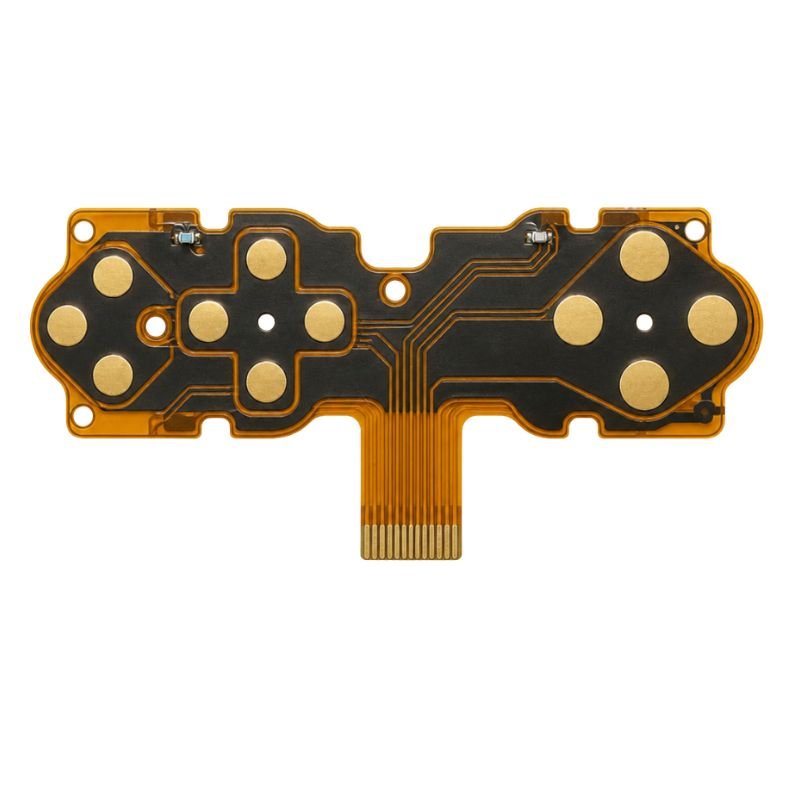
Simple structure, low thickness, and easily controlled manufacturing costs are ideal for LED components, small electronic modules, and basic sensors.

Provides more routing space without increasing board size significantly and is commonly used in limited-space designs with a large number of circuits.

Through a rational distribution of power, signal, and ground lines across layers, greater integration of complex electronic functions can be achieved.
Polyimide PCB Types by Material

By using an adhesive layer to connect the copper foil and the PI substrate, suitable for large-scale production.

Without an additional adhesive layer, the structure is thinner and offers better heat resistance, which works well in fine circuits.
Advantages of Consons Polyimide PCB

Operates continuously in environments up to 260°C while preventing delamination, deformation, and blistering.

The ultra-thin PI structure supports 3D assembly, wiring in confined spaces, and long-term dynamic bending with consistent performance.

A lower CTE closely matches the copper foil, minimizing internal stress generated during thermal cycling and avoiding circuit cracking and via fatigue.

Resists moisture, humidity, industrial contaminants, and mild chemical corrosion, sustaining steady electrical and mechanical performance in harsh industrial and outdoor conditions.
One-Stop Polyimide PCB Solutions
Consons offers one-stop polyimide PCB solutions covering the entire process from material matching and structural design to circuit fabrication, precision assembly, and testing. To address your product needs, we can assist you in choosing adhesive-backed or adhesive-free PI materials and customized single-sided, double-sided, multilayer, or rigid-flex structures. We also undertake design work for board thickness, bend zones, via structures, and surface finishes. Our engineering team collaborates with you every step of the process to guarantee PCBs that perfectly match your product’s space, temperature, and electrical parameters.

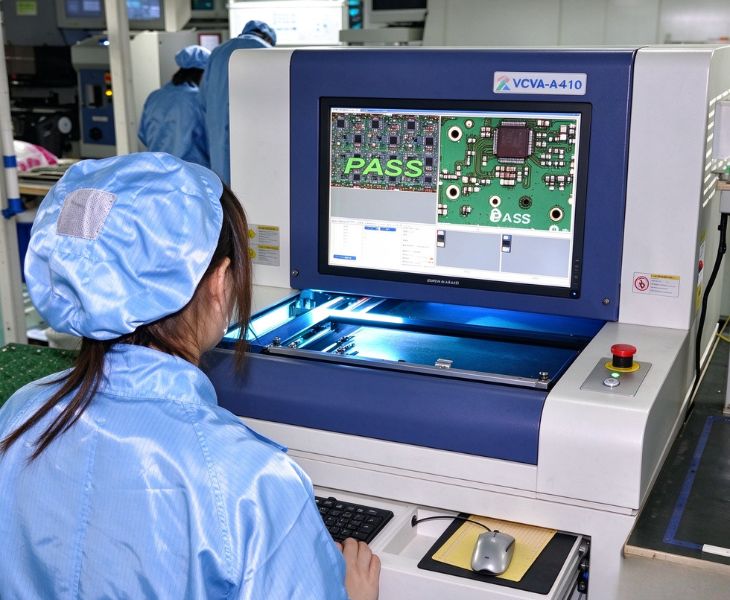
Strict Polyimide PCB Quality Control
Our polyimide PCB inspection processes strictly adhere to the ISO 9001 quality management system and IPC Class 2 industry certification. In the manufacturing process, we use AOI optical inspection equipment to verify the layout of the circuit patterns. We rely on flying probe testing to accurately check circuit connectors and the integrity of electrical systems. In addition, we implement precision control management of lamination, drilling, and surface treatment. If you have specific polyimide PCB inspection requirements, we can help you complete them by arranging the necessary tests in advance.
Why Choose Consons As Your Polyimide PCB Partner?


Professional Manufacturing Experience: With over 20 years of experience in manufacturing polyimide PCBs, we are familiar with the production standards across industries, helping you quickly launch the PCB project.
Full OEM & ODM Customization: Consons offers end-to-end OEM and ODM customization services for polyimide PCBs, including materials, structure, number of layers, thickness, and surface treatment.
Global Delivery Capability: We collaborate with over 40 countries and have extensive overseas polyimide PCB project implementation experience, which enables us to help you successfully carry out your project.
Reliable After-sales Service: We offer 24/7 after-sales service. You can contact us at any time if you have any questions about our polyimide PCBs. Our team will strive to assist you in resolving these issues.
Our Polyimide PCB Specification
| Parameter Category | Technical Parameter | Engineering Specification & Options |
| General & Layer Capability | Layer Count | Flexible PCB: 1–8 Layers Rigid-Flex PCB: Up to 30 Layers (Hybrid stack-ups available if applicable) |
| Base Material | DuPont PI, Shengyi PI | |
| Coverlay / Covercoat | Polyimide Coverlay (PI) / PET Film / Photoimageable Covercoat (Optional) | |
| Dimensions & Copper Capability | Board Size Range | Min. 6 × 6 mm Max. 406 × 610 mm (FPC) |
| Finished Board Thickness | FPC: 0.1–0.8 mm | |
| Copper Weight | 1/3 oz–2 oz | |
| Copper Foil Type | RA Copper for dynamic flex applications; ED Copper for static flex applications | |
| Precision & Tolerance | Min. Trace Width / Spacing | • ≤ 1/3 oz copper: 2 mil / 2 mil (0.05 mm) • > 1/3 oz copper: 3 mil / 3 mil (0.075 mm) |
| Hole Capability | Min. Mechanical Drill: 6 mil Min. Annular Ring: 3 mil | |
| Dimensional Tolerance | ±0.05 mm | |
| Impedance Control | ±6%–±10% (According to design requirements) | |
| Mechanical & Reliability Performance | Bending Performance | Static bending and dynamic bending capability available according to layer structure, copper thickness, and application requirements |
| Thermal Performance | Suitable for soldering processes and high-temperature operating environments | |
| Surface Finishes | Available Finishes | ENIG, OSP, Immersion Silver, Immersion Tin, HASL, Lead-Free HASL |
| Quality & Compliance | Inspection Standards | IPC-A-600, IPC-6013 |
| Design Standard | IPC-2223 | |
| Factory Testing & QA | AOI Inspection, Electrical Testing, Impedance Testing (Optional) | |
| Environmental Compliance | RoHS Compliant, REACH Compliant |
Where Are Consons’ Polyimide PCBs Applied?
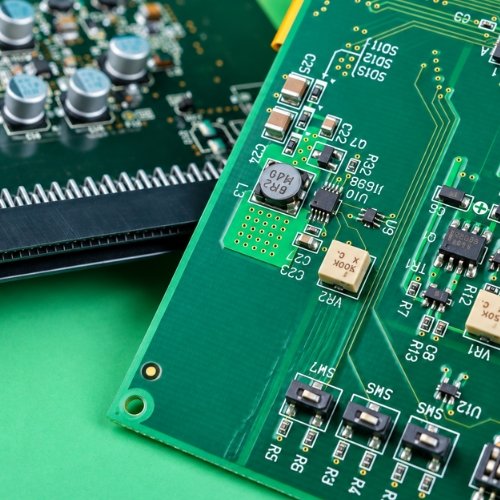
Our polyimide PCBs are widely used in avionics systems, drone electronics, and aerospace control modules. With their excellent thermal stability and ultra-thin design, they easily fit into limited installation spaces and reduce traditional wiring harnesses and connection structures.

BMS modules and ADAS perception units operate under continuous vibration. Our polyimide PCBs employ optimized adhesive layers and stress-relief structures to endure automotive vibrations, reduce circuit cracking and delamination, and comply with IATF 16949 standards.

Our polyimide PCBs are ultra-thin and flexible, with outstanding resistance to moisture and heat, ideal for the compact internal spaces of medical devices, enabling safe and stable signal collection even under repeated sterilization conditions.
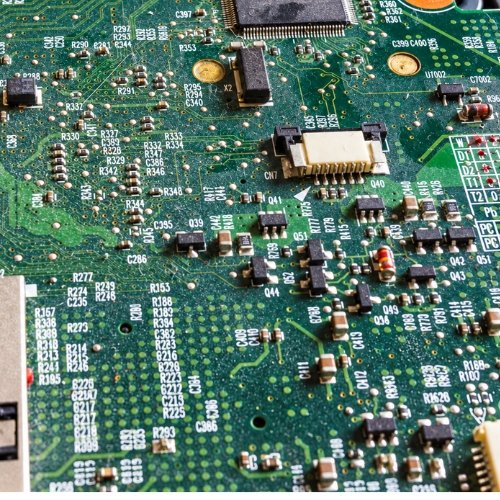
We provide polyimide PCBs for internal connection boards in industrial robots, on-site sensing devices, and energy storage control units. These PCBs can tolerate oil mist, dust, and long-term cyclic vibration in factory environments, sustain reliable electrical performance, and decrease equipment downtime.

Consumer products commonly prioritize lightweight, slim, and compact designs. Our polyimide PCBs can withstand numerous dynamic bends, enabling miniaturized stacked layouts ideal for smartwatches and TWS earbuds.
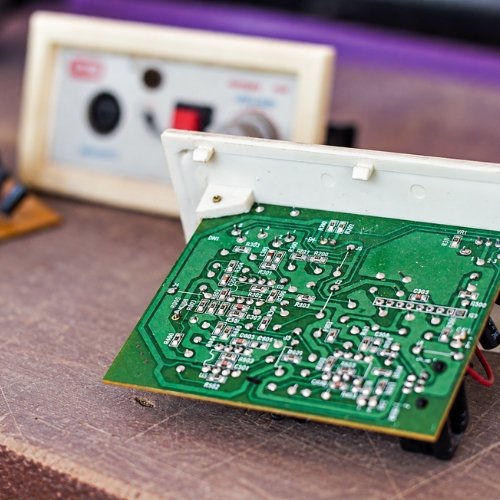
Our polyimide PCBs can also be used in optical module interconnect boards and small RF antenna assemblies. With stable dielectric properties, these boards achieve controlled impedance and low signal loss, safeguarding high-speed RF signal transmission in wireless communication modules.
Project Cases of Consons Polyimide PCB

This client is designing a new generation of ultra-thin health monitoring wristbands. The existing rigid PCB solution could not conform to the body’s curved surface, and the multiple board layers made the device casing bulky. Traditional flexible boards lack resistance to the high temperatures of SMT soldering, leading to low production yield.
Our polyimide PCB material and optimized circuit design have resolved the issue of deformation during high-temperature soldering, achieving perfect matching with the curved assembly structures of wearable devices. The overall board thickness has also been reduced by 22%. Our solution has increased their mass production yield from 83% to 97%, dramatically lowering production costs and after-sales rework expenses.
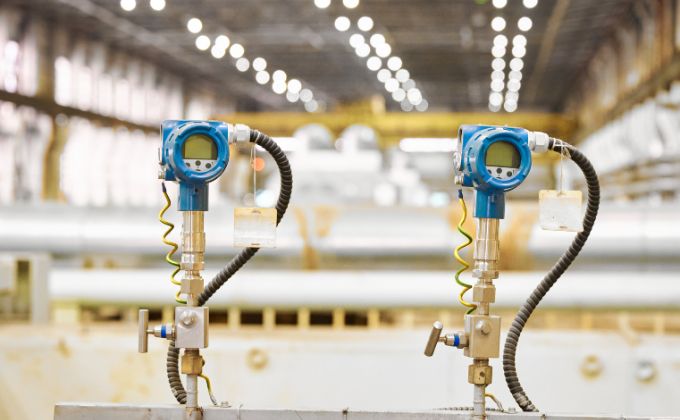
The customer’s industrial high-temperature sensors are required to operate continuously in high-temperature and dusty environments. The original standard PCBs frequently experienced issues with oxidation, aging, and circuit drift. The collected data was incorrect, which seriously affected the automated operation of the production line.
We use a polyimide substrate with a dust-proof and oxidation-resistant surface treatment. We also optimize circuit spacing and heat dissipation routing. The upgraded board delivers better performance in high-temperature resistance, dust resistance, and corrosion resistance. The sensor data error rate was reduced by 90%, helping the production line equipment run smoothly in the long term.
Consons Polyimide PCB Manufacturing Process
Every step of our polyimide PCB manufacturing process strictly adheres to the corresponding quality inspection procedures to guarantee that the products you receive have no abnormal quality issues.
Explore Our Polyimide PCB Boards

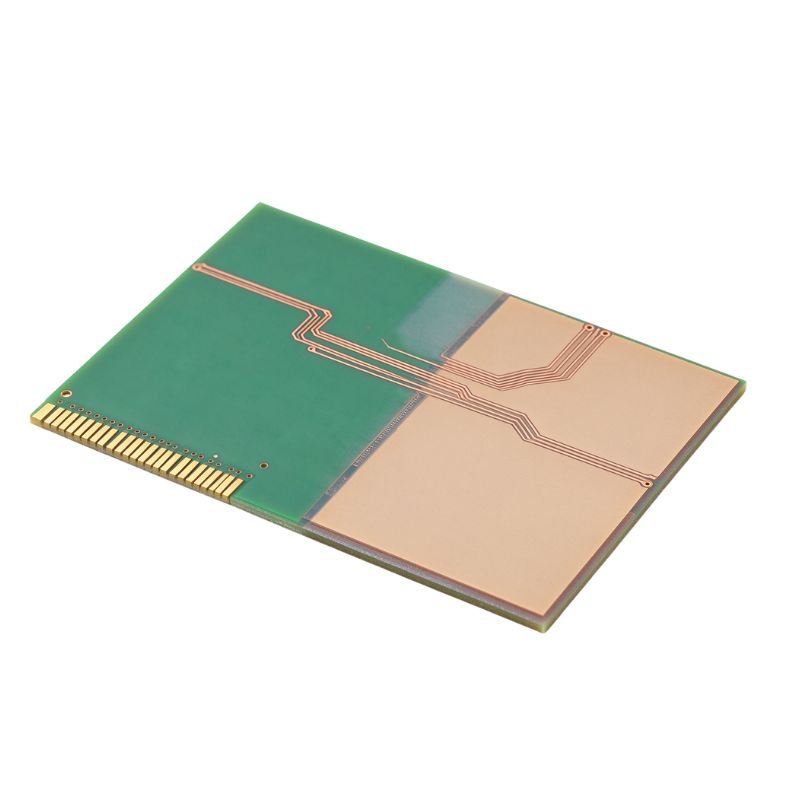

Polyimide PCBs and FR4 PCBs are designed for different requirements. Below is a comparison table of the two types of PCBs, which you can use as a reference when choosing a PCB.
| Comparison | Polyimide PCB | FR4 PCB |
| Material | Polyimide film with excellent heat resistance and flexibility | Glass fiber reinforced epoxy laminate |
| Flexibility | Supports bending and space-saving designs | Rigid structure with limited bending capability |
| Thermal Performance | Better resistance to high temperatures and thermal cycling | Suitable for standard operating environments |
| Mechanical Reliability | Better for repeated bending and vibration applications | Better rigidity but not suitable for dynamic flexing |
| Typical Applications | Wearable devices, medical electronics, automotive, aerospace, sensors | Computers, industrial equipment, consumer electronics |
Before providing a quote for a Polyimide PCB project, we need you to submit the following information.
- Gerber: Contains design data for each layer of the polyimide PCB, like routing, solder mask, silkscreen, and polyimide coverlay information;
- Drill Files: Provide the locations and dimensional parameters of through-holes, blind holes, buried holes, and others;
- PCB Manufacturing Specifications: Include layer stack-up, board thickness, copper thickness, surface treatment, material requirements, and additional special fabrication needs;
- BOM and Assembly Documents (for PCBA projects): Used to verify component procurement and assembly demands of the polyimide PCB.
Yes, polyimide PCBs can withstand standard SMT reflow temperatures under proper design and manufacturing conditions. Polyimide materials have outstanding thermal stability, preserving the structural integrity during lead-free reflow soldering. Through appropriate choice of materials and control of the lamination process, polyimide PCBs can endure multiple soldering processes and minimize reliability risks like delamination, warpage, and bubbling.
Under static bending conditions, the minimum bending radius of our single-layer flexible PCBs is 6–10 times the board thickness; for multilayer flexible and rigid-flex PCBs, the minimum bending radius in the flexible areas can reach 12–20 times the board thickness.
For products requiring frequent bending, we recommend combining with RA Copper. For 1,000 bending cycles, the bend radius of single-layer flexible PCBs is 20-25 times the thickness, while for the flexible regions of multilayer flexible and rigid-flex boards, it is 50–80 times the board thickness; when targeting a bending life of over 100,000 cycles, the bending radius must be at least 100 times the thickness.
We provide surface finishes that include ENIG, OSP, Immersion Tin, Immersion Silver, Hard Gold Plating, and ENEPIG. These treatments are suitable for different application needs of polyimide PCBs, covering welding, connector mating and high‑frequency transmission.
For fine-pitch SMT assembly, we prioritize the ENIG surface finish. Because its pad surface offers high flatness and uniform solder paste wetting, it significantly decreases issues of fine-pitch pin bridging and cold solder joints. Additionally, its excellent oxidation resistance enables extended storage life and withstands multiple reflow soldering cycles.
Yes. We will provide an impedance test report and a microscopic section analysis report before shipment, depending on your requirements. Please inform our engineering team early in the project so that we can test the samples in advance and organize inspections that you need.
The prototyping cycle for standard single-layer polyimide PCBs is approximately 5–10 business days. For multilayer structures, the cycle is roughly 10–15 business days.
Lead times for small to medium-volume orders are 10–15 business days. Mass production orders of 10,000 units or more typically require 15–20 business days. Production of complex and high-precision polyimide PCBs usually takes about 20–25 business days.
The actual lead time may be affected by the number of layers, complexity of the process, and special demands. After project evaluation, we will give you an accurate schedule.